From the 5th Century to UNESCO
History of Indonesian Batik
Trace the great moments that shaped batik — from the oldest artifacts in Toraja to the 2009 UNESCO recognition and the digital innovations of today.
~5–6 M
The Oldest Batik in the Archipelago
The oldest batik textile was found in Toraja Regency, Sulawesi. The artifact is estimated to date from the 5th century AD, early evidence of the wax-resist technique in the archipelago.
~8–10 M
The Hindu-Buddhist Era
Batik motifs began to appear on Hindu-Buddhist statues in Java — such as the Prajnaparamita and Mahakala figures from the Singhasari period. Batik began to be part of ritual and royal life.
~13–15 M
The Majapahit Kingdom
Batik flourished in the Majapahit era. The batik technique was widely mastered by Javanese society. Early patterns such as Kawung and Semen began to be known in court circles.
~15 M
The Demak Sultanate
The arrival of Islam in Java through the Demak Sultanate brought changes to batik motifs. Figurative elements began to be replaced by geometric and arabesque patterns in line with Islamic teaching.
~16 M
The Pajang & Mataram Sultanates
Batik continued to develop under the Pajang and Mataram sultanates. The Laweyan batik village in Solo began to be known as a respected center of court batik production.
~16–17 M
The Islamic Court Era
Forbidden motifs emerged that could only be worn by nobles. Parang Rusak became the exclusive motif of the king, while kawung and semen were used by court circles.

Foto: Gunawan Kartapranata — CC BY-SA 4.0, Wikimedia Commons
1745
Founding of the Surakarta Court
Pakubuwono II founded the Surakarta Court. Court batik began to be standardized — sacred motifs such as Parang, Kawung, and Sido emerged as the identity of the sunanate.
1755
The Treaty of Giyanti
The Mataram Sultanate split into the Surakarta Sunanate and the Yogyakarta Sultanate. Each court developed its own batik style — Solo with fine brown soga, Yogyakarta with bold black-and-white lines.
~18 M
VOC & Batik as Commodity
From the 18th century, batik became an important textile commodity for the Dutch VOC. Batik cloth was traded to Africa and Europe, making Javanese batik one of the world's most influential textiles.
1817
Raffles Documents Batik
Thomas Stamford Raffles published 'The History of Java' — the first book to document Javanese batik systematically for the Western world.

Foto: Wikimedia Commons — CC BY-SA
1850-an
Coastal Batik Begins to Develop
Eurasian batik entrepreneurs such as Eliza van Zuylen began opening workshops in Pekalongan. The acculturation of Chinese, Arab, and European cultures gave birth to coastal batik with bright colors and bouquet motifs.

Foto: Wikimedia Commons — CC BY-SA 4.0
1873
Batik Reaches Europe
Dutch merchant Van Rijckevorsel brought his batik collection to the Ethnography Museum in Rotterdam. The collection was later exhibited at the Exposition Universelle in Paris in 1900.
~19 M
Lasem & Tiga Negeri Batik
Lasem became one of the most important coastal batik centers. Tiga Negeri batik — dyed in Lasem (red), Pekalongan (blue), and Solo (sogan) — became a masterpiece of multi-regional batik.
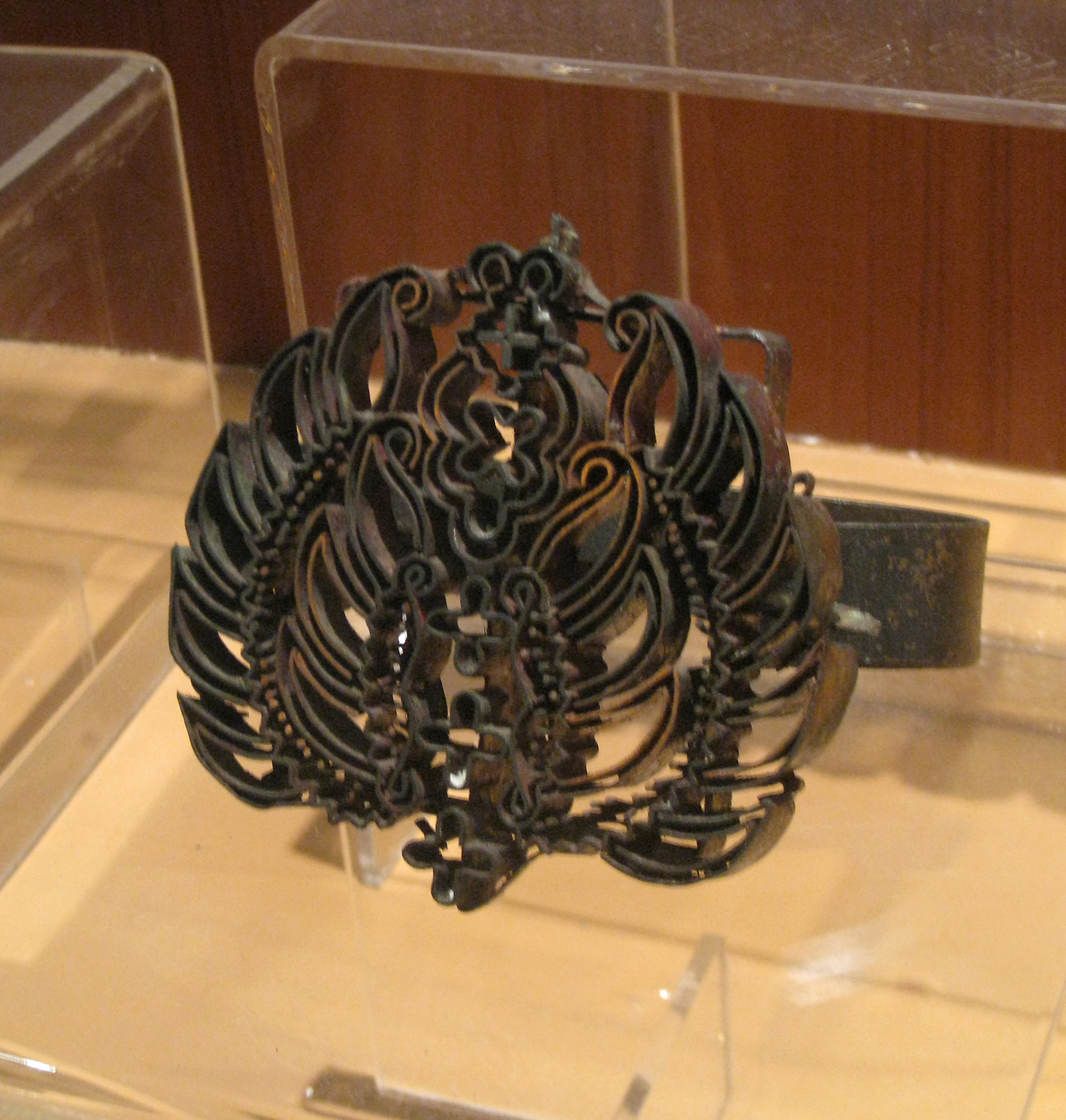
Foto: Gunawan Kartapranata — CC BY-SA 3.0, Wikimedia Commons
1920-an
Stamped Batik Is Introduced
After World War I, the stamped batik technique (copper stamp) was introduced in Pekalongan. This technique enabled mass production, making batik more affordable and widespread.
1925
Oey Soe Tjoen Founds His Workshop
Oey Soe Tjoen founded the largest fine hand-drawn batik workshop in Pekalongan. His work continued the tradition of Eliza van Zuylen and became the standard of excellence for Indonesian hand-drawn batik.
1940-an
The Hokokai Era
During the Japanese occupation, the batik industry declined. However, Japanese-funded workshops produced very fine Hokokai batik — with sakura, butterfly, and chrysanthemum motifs.
1945
Independence & Batik as National Heritage
After the proclamation of independence, batik began to be identified as Indonesia's national heritage. Batik became the official attire of state officials and a symbol of cultural sovereignty.
1955
Go Tik Swan Creates 'Batik Indonesia'
President Soekarno asked Go Tik Swan to create a batik representing the entire nation. He combined classic court motifs with bright coastal colors, giving birth to the concept of 'Batik Indonesia'.
1960-an
Mass Batik & Industrialization
Stamped and printed batik began to dominate the market. Mass production made batik more affordable, but also sparked debate about the authenticity and quality of traditional hand-drawn batik.
1970-an
Iwan Tirta Begins His Work
Iwan Tirta turned from a legal career to the world of batik. He began researching, developing, and documenting Javanese batik motifs — laying the foundation for the academic study of batik.
1980-an
Batik Goes to Fashion Week
Indonesian designers began bringing batik to international fashion stages. Tuty Cholid, Edward Hutabarat, and Ghea Panggabean introduced contemporary batik to the world.
1985
Batik Exhibition at the National Museum
A major batik exhibition at the National Museum in Jakarta drew international attention. Ancient and contemporary batik collections were displayed, strengthening batik's position as a living cultural heritage.

Foto: Wikimedia Commons — CC BY-SA
1994
Batik at the APEC Summit
Iwan Tirta designed the batik shirts worn by world leaders at the APEC summit in Bogor. This moment became a turning point for batik's recognition on the global diplomatic stage.
2000
The Indonesian Batik Museum Is Founded
The Indonesian Batik Museum was founded at Taman Mini Indonesia Indah, Jakarta. The museum became a center for education and preservation of batik from across the archipelago.
2 Oktober 2009
UNESCO Recognizes Indonesian Batik
UNESCO inscribed hand-drawn and stamped batik as a Masterpiece of the Oral and Intangible Heritage of Humanity. October 2 is commemorated as National Batik Day.
2010
Mandatory Batik Friday
The Indonesian government designated Friday as a national batik day. Government employees are required to wear batik every Friday, strengthening batik as a national identity.

Foto: Gunawan Kartapranata — CC BY-SA 4.0, Wikimedia Commons
2010-an
Batik Goes Global
Anne Avantie designed kebaya for Miss Universe. Iwan Tirta Private Collection went international. Batik became global fashion known on world runways.
2018
Batik Joins Google Arts & Culture
Indonesian batik joined the Google Arts & Culture platform, allowing visitors from around the world to explore batik collections digitally. Batik became more accessible globally.
2020-an
Batik Fractal & Digital Innovation
Digital technology began to merge with traditional batik. Batik Fractal uses fractal mathematics to create new motifs, bridging tradition and science.
2020-an–Kini
Batik in the Digital Era
Batik is adapting to the digital era — from online marketplaces to batik NFTs. Batik museums are emerging, virtual workshops are popular, and the younger generation is returning to hand-drawn batik.
Learn More
The Figures & Regions Behind the History
Meet the masters who preserve batik and the regions that became its production centers.
Published by Batik Soehadi — Jl. Demak Bintoro 5, Nusukan, Banjarsari, Surakarta (Solo), Central Java 57135